Sarajevo, ⭐ the capital of Bosnia and Herzegovina, offers one of Europe’s most layered and vibrant experiences. Often called the ‘Jerusalem of Europe,’ it blends Islamic, Orthodox, Catholic, and Jewish traditions in a city shaped by Ottoman and Austro‑Hungarian influences. At its heart lies Baščaršija, the Ottoman‑era bazaar where cobblestone lanes, sizzling street food, and the iconic Sebilj fountain create a lively, timeless scene. Landmarks like Gazi Husrev‑beg Mosque, Vijećnica, and the Latin Bridge reveal centuries of history in just a few steps—where Istanbul’s spirit meets Vienna’s elegance.
Discovering the Magic of Modern Sarajevo (YouTube link)
What to Expect in Sarajevo
Visiting Sarajevo offers a mix of beauty, history, emotion, and everyday warmth. Here’s a quick look at what defines the experience:
A crossroads of cultures — Islamic, Orthodox, Catholic, and Jewish traditions coexist in a compact city shaped by Ottoman and Austro‑Hungarian influences.
A vibrant Old Town — Baščaršija’s cobblestone lanes buzz with coppersmiths, street food, the Sebilj fountain, and a blend of Istanbul‑meets‑Vienna architecture.
Landmarks with deep stories — Gazi Husrev‑beg Mosque, Vijećnica, and the Latin Bridge reveal centuries of shifting empires and pivotal world events.
Visible layers of recent history — Sarajevo Roses, bullet‑marked facades, and museums like the War Tunnel and Galerija 11/07/95 offer powerful, personal perspectives.
Warm hospitality and café culture — Locals linger over Bosnian coffee, share stories easily, and create a welcoming atmosphere for visitors.
Hearty, affordable food — Burek, ćevapi, pljeskavica, and fresh river trout anchor a simple but satisfying cuisine.
Nature at your doorstep — The Trebević cable car leads to panoramic views, hiking trails, and remnants of the 1984 Olympics; hilltop fortresses offer sunset vistas.
A peaceful, authentic vibe — Compact, walkable, and great value compared to other European capitals, with a balance of energy and reflection.
A lasting emotional impact — Many travelers describe Sarajevo as unforgettable for its mix of resilience, beauty, and humanity.
Photo Gallery
The photos below were taken in May 2022, during a stretch of mild spring weather. Clouds drifted through most days, casting a soft light that made exploring Sarajevo's historic landmarks feel calm and unhurried.
Sarajevo Meeting of Cultures — a landmark marking where East and West meet
Caffe Divan — Sarajevo’s Cozy Courtyard Escape
Tašlihan — Ruins of Sarajevo’s Ottoman Caravanserai
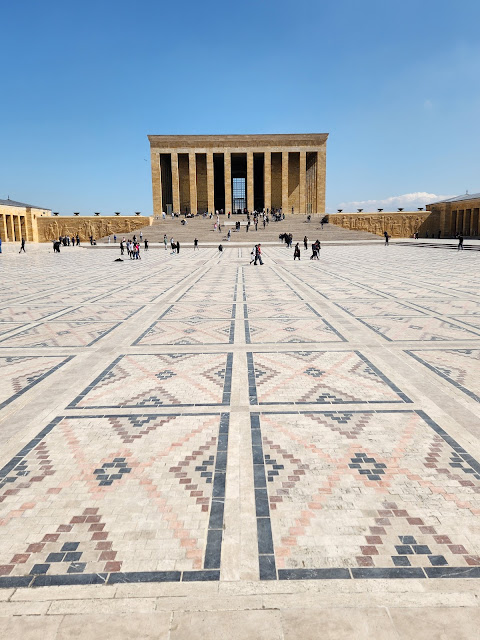
TL;DR : Anitkabir is Ankara’s must‑see landmark—home to Atatürk’s mausoleum, the iconic Lions Road, and the Changing of the Guard. This guide covers what to see and the site’s history. The architecture of Anıtkabir isn't just "grand"—every stone has a meaning Anitkabir ⭐⭐⭐, the hilltop mausoleum of Mustafa Kemal Atatürk , remains one of Turkey’s most powerful national symbols. More than a burial site, the Ankara complex blends monumental architecture with the country’s modern identity, drawing visitors into a space shaped by secularism, independence, and collective memory. The atmosphere is solemn and orderly. Many Turks regard Atatürk as the architect of the republic, and the site often evokes quiet reverence—sometimes even tears. International visitors, too, describe a sense of gravity and respect that sets Anitkabir apart from typical tourist stops. It is a place where national pride and reflection converge, not a venue for casual sightseeing. Phot...
Počitelj from Above: Mosque, Clock Tower, and the Neretva River Welcome to the "Stone Sentinel" of the Neretva Valley! As you arrive, look up to see Počitelj ’s signature skyline—a trio of historic markers rising from left to right: the grand fortress tower , the elegant mosque minaret , and the ancient clock tower . These silhouettes define a hillside profile that has remained timeless for centuries. Your Journey Through the Open-Air Museum You are free to wander through these winding stone lanes at your own pace, as there is no entry fee to explore the village site itself. As we walk, keep an eye out for these architectural treasures: The Šišman Ibrahim-Paša Mosque : This 16th-century masterpiece is famous for its slender stone minaret—a tall, graceful column standing beside the domed prayer hall. It is often open for visitors to step inside and experience its quiet beauty. The Sahat-Kula & Hammam : We will pass the historic clock tower and the preserved remnants of ...



Comments
Post a Comment